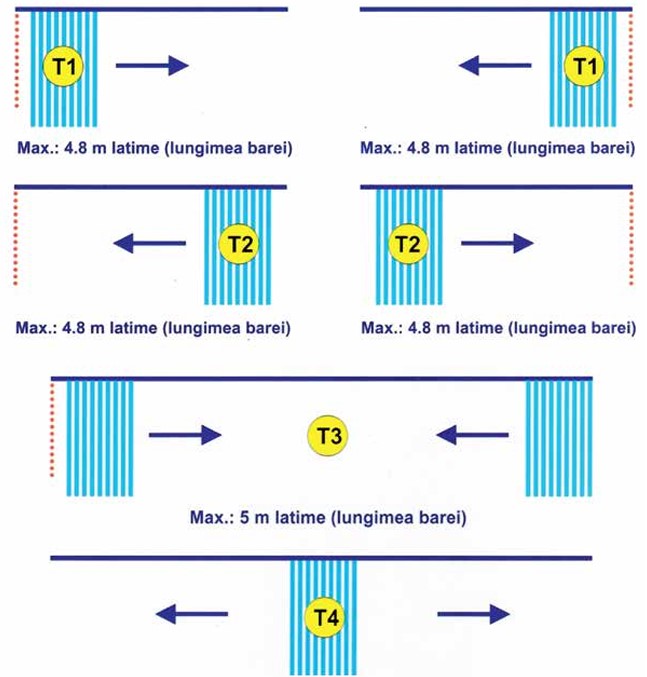



Measure the width of the recess at three points: top, middle and bottom.
Note the smallest value.
Subtract 1 cm so the blind does not rub against the walls.
Height
Measure the height of the recess on the left, in the centre and on the right.
Note the smallest value.
Subtract 1–2 cm to avoid touching the windowsill.
General recommendations
For ceiling installation, we recommend measuring a distance of 8 cm from the wall – this is where the holes will be drilled. On balconies or rooms enclosed with double glazing, the position of the window handle must be taken into account, as it may protrude further and affect the optimal installation distance.
In this type of installation, the blind completely covers the window.
Width
Measure the total width of the window (frame + glass).
Add 10–20 cm (5–10 cm on each side) for effective coverage and to prevent light from coming in at the edges.
Height
Measure from the point where you will mount the bracket (wall or ceiling).
Measure down to the desired level (usually below the windowsill or down to the floor).
If the blind goes down to the floor: subtract 1–2 cm so the slats do not touch the floor.
Important
For vertical blinds, the final height includes the headrail + slats.
The size given in the order must be the total height of the system, not just the fabric.
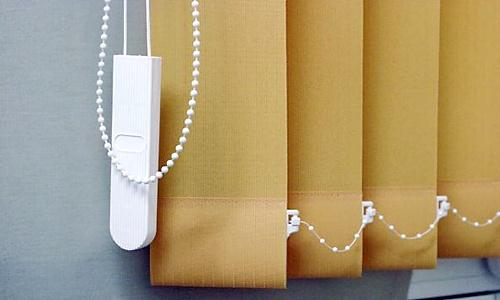
Insert each slat (fabric strip) into the clips in the headrail.
Attach the weights to the bottom of the slats.
Connect the slats with the bottom chain (if the model includes this element).
Check that all the slats slide correctly.
Use the rotation mechanism to check the 0° – 180° orientation.
If a slat touches the floor, adjust the height or the chain.
If the slats are not perfectly aligned, check the position of the runners in the headrail.
If the headrail is not perfectly straight, loosen the brackets and realign it with a spirit level.
Recommended materials for fixing the headrail.
Depending on the type of ceiling, different wall plugs are used: concrete, masonry, plasterboard